
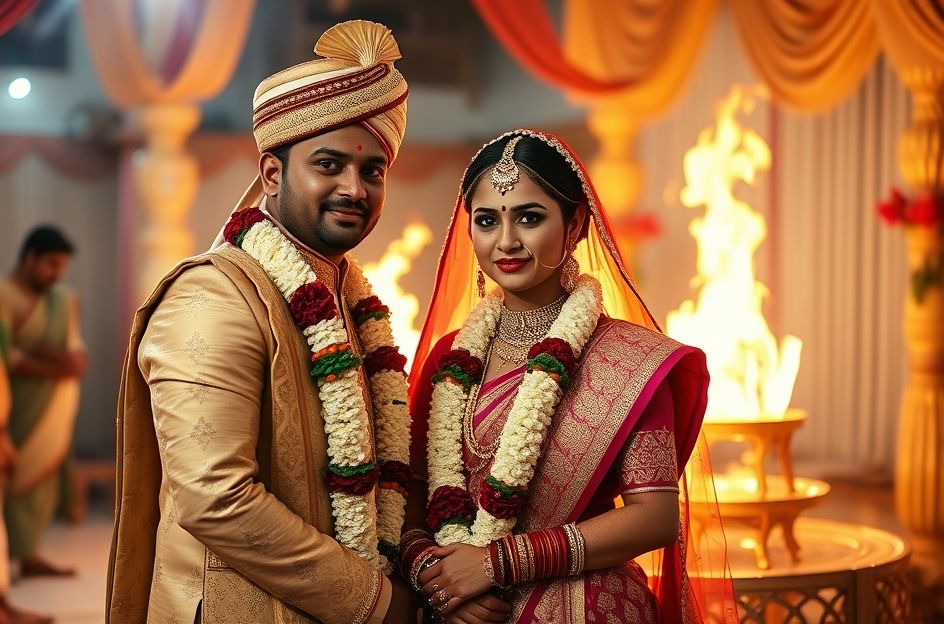
Gujarati weddings are renowned for their vibrant celebrations and rich traditions. Often characterized by financial prosperity due to the prevalence of business ownership within the Gujarati community, these weddings are lavish affairs where money is rarely a constraint. Beyond the joyous occasion, these events also foster valuable connections between customers and vendors.
The ceremonies are steeped in tradition, beginning with pre-wedding rituals designed to invoke blessings and ensure a harmonious union.
**Pre-Wedding Rituals**
* **Mandap Mahurat:** In their respective homes, both the bride and groom’s families participate in the Mandap Mahurat, seeking blessings from Lord Ganesha for a smooth and successful wedding. This pooja, performed by a priest a few days before the wedding, is a joyous occasion filled with relatives and well-wishers.
* **Graha Shanti:** This ritual involves all the gathered relatives participating in a pooja at an auspicious time determined by the priest. The Graha Shanti aims to bring peace and harmony to the couple’s future.
* **Jaan:** A heartwarming tradition where the groom, accompanied by his family, arrives at the bride’s residence to receive blessings from his future in-laws.
**Wedding Day Rituals**
* **Arrival and Attire:** The bride and groom arrive at the wedding venue in beautifully decorated vehicles. They change into their wedding attire and meet on a shared platform (dais) to begin the ceremonies.
* **Kanya Daan:** A pivotal moment where the bride’s father symbolically entrusts his daughter to the groom, expressing his faith that she will be well cared for. The bride is revered as Goddess Laxmi, and the groom as Lord Narayana. The father places the bride’s hand into the groom’s hand before the sacred fire.
* **Hasta Milap:** This ritual further solidifies the union. The groom’s scarf is tied to the bride’s sari, symbolizing their bond before all the assembled guests. The priest performs a pooja alongside the sacred fire.
* **Saptapadi (Saat Phere):** A crucial ritual where the couple takes seven vows together. In some North Indian traditions, this involves walking around the sacred fire. In Gujarati weddings, the priest places seven small heaps of rice on the floor. As the bride touches each heap with her right toe, the couple recites the seven vows. Following this, the couple takes four Mangal Pheras representing Dharma (righteousness), Artha (prosperity), Kama (desire), and Moksha (liberation).
With the completion of these rituals, the couple is declared husband and wife, witnessed by all present. They then seek blessings from the elder guests for a long and happy married life.
**Post-Wedding Rituals**
* **Reception:** A grand reception is held in a beautifully decorated hall. The bride and groom are seated on an ornate dais, visible to all the guests. Guests offer greetings and gifts to the couple. After all the guests have been greeted, everyone enjoys a celebratory dinner.
* **Vidaai:** An emotional farewell ceremony where the bride bids a tearful goodbye to her family as she prepares to leave for her new home with her husband.
* **Ghar Ni Laxmi:** The bride is welcomed into the groom’s home as the Ghar Ni Laxmi (Goddess of Fortune). She symbolically pushes over a vessel filled with rice. The groom’s family gathers around the couple, and playful games are often played to help the bride integrate into the family.
Following these games, the newly married couple is left to begin their married life.
We extend our heartfelt wishes to the couple for a lifetime of happiness and love.