
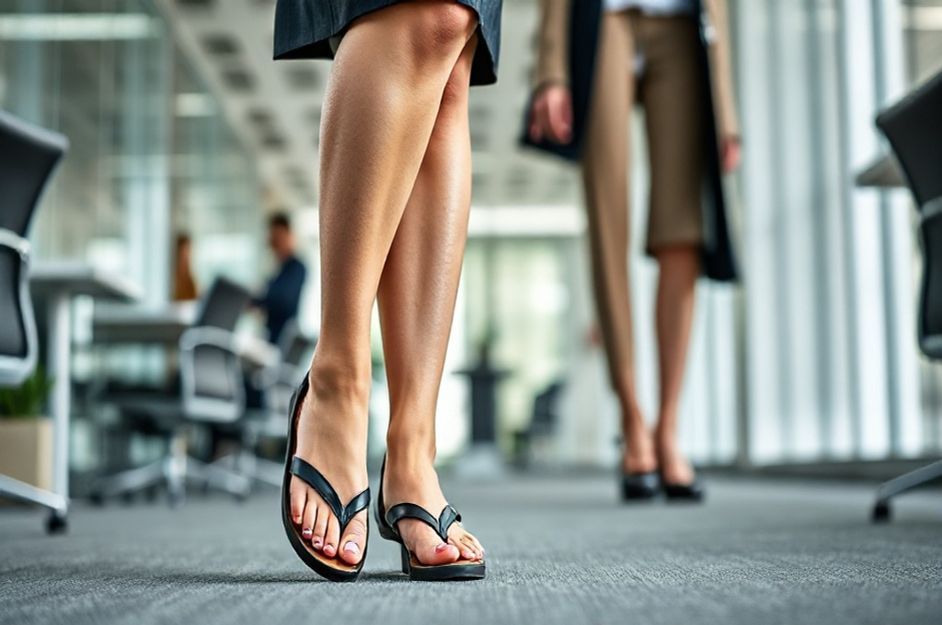
The rising popularity of flip-flops, particularly during warmer seasons, has sparked debate about their appropriateness in the workplace. While some view them as a comfortable and stylish option, U.S. fashion experts suggest that wearing flip-flops at work could negatively impact both foot health and career prospects.
The availability of diverse flip-flop styles – beaded, leather, sequined – contributes to their perceived acceptability in professional environments. Some employees admit to wearing flip-flops on days without client meetings, or when those who disapprove are absent.
For many, flip-flops are a summer wardrobe staple. An Old Navy and Gap survey revealed that flip-flops topped the list of summer work attire for students, with over 31% considering them essential.
However, many companies disagree. BNP Paribas, for example, prohibits flip-flops under their “no beachwear” dress code. Style experts warn that flip-flops can damage one’s career. Meghan Cleary, a style commentator, believes that footwear reflects a woman’s mood. Wearing flip-flops can project an image of relaxation and vacation, an unsuitable message in a professional setting.
Beyond style considerations, doctors raise concerns about the impact of flip-flops on foot health. The American College of Foot and Ankle Surgeons links flip-flops to increased heel problems in teens and young adults. The lack of arch support in thin-soled flip-flops can intensify abnormal foot biomechanics, leading to pain and inflammation.
Flip-flops have a long history, tracing back at least 70 years to traditional Japanese woven sandals and possibly wooden-soled sandals in New Zealand. These Y-shaped sandals are globally recognized and worn across social classes, especially in developing countries where they are affordable and easily made.
The term “flip-flop” originates from the sound produced when the sandal strikes the ground. Their transformation into a trendy fashion item has led to their widespread availability in various colors and embellishments, including bridal flip-flops adorned with Swarovski crystals costing $140.
In June 2005, the Northwestern University women’s lacrosse team faced criticism for wearing flip-flops to a White House meeting with the President, as the footwear was deemed inappropriate.
Ellen Campuzano, president of the Committee of Color and Trends, suggests that flip-flops’ popularity may be waning. According to her, fashion trends typically last around five years, and she believes flip-flops have reached their peak and may soon be replaced by a new summer footwear trend.