
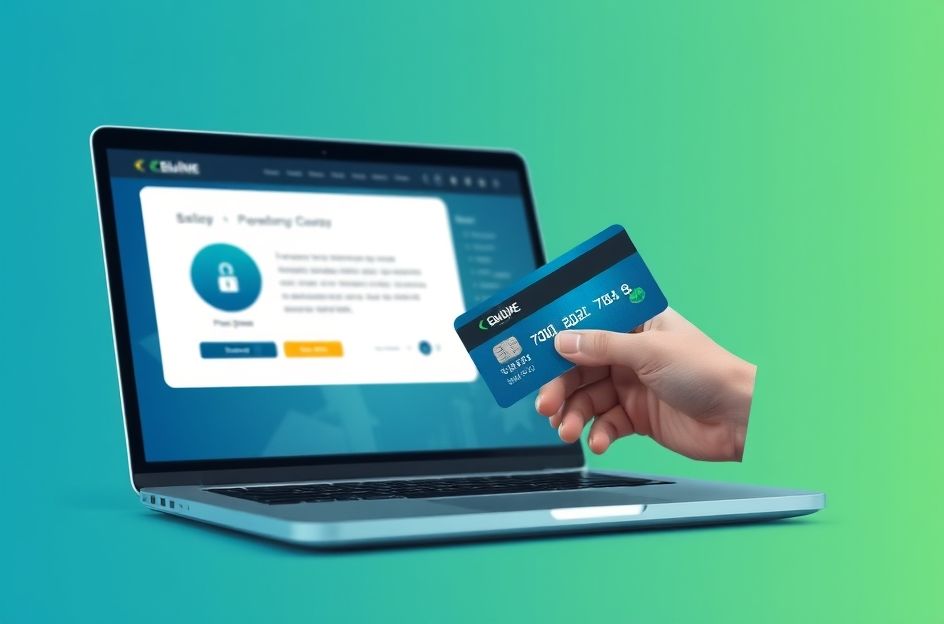
Selecting the right credit card processor is a crucial decision for any online business. The method you choose significantly impacts your website’s functionality and customer experience. There are two primary options: establishing a direct merchant account or utilizing a third-party processor.
A strategic approach involves outlining your business needs and comparing available plans. Prioritize factors like cost and other essential features. Evaluating a true merchant account alongside third-party processors is vital.
**True Merchant Accounts vs. Third-Party Processors**
With a true merchant account, you engage directly with a bank (often through a sales agent) to establish an account solely for your business. You maintain complete control and responsibility for the account. While the account doesn’t inherently include a payment gateway, you can select one independently.
A merchant account directly connects you with major credit card networks like MasterCard, Discover, and American Express. Accepting payments from their members requires strict adherence to their guidelines.
Third-party processors, on the other hand, possess their own merchant accounts, enabling individuals and businesses to accept credit card payments through their platform. These processors establish the rules, and you must comply as a condition of using their account.
**Consider a third-party processor if:**
* Your business is not yet formally registered.
* You’ve been blacklisted by other processors.
* Your business or merchandise is considered high-risk.
* You have poor or no credit history.
* You process a low volume of transactions.
* You lack the technical expertise for complex API integrations.
**Additional Considerations for Third-Party Processors:**
1. Rates may not be significantly higher for high-risk businesses initially, but can be less flexible as you grow.
2. They typically don’t perform extensive credit checks.
3. You’re generally required to use their integrated gateway.
4. The processor’s name appears on customer statements.
5. Fund deposit times can be longer.
6. Rate negotiation is usually not possible.
Most established online businesses opt for a merchant account and payment gateway due to several advantages:
* Potentially lower discount rates for high transaction volumes.
* Full control over the account and direct interaction with customers.
* A seamless checkout experience where transactions are processed directly on your website.
* A more professional image, as a true merchant account aligns with customer expectations.
Applying for a merchant account involves a credit check, and the account must be used solely for business purposes. Rates are negotiable (though high-risk products attract higher rates), and you can select your preferred payment gateway. Your business name appears on customer statements, and funds are typically deposited within 1-3 days. Contracts may extend for several years.
For startups with tight budgets, cost is often a primary concern. Comparing options can be challenging due to varying fee structures. Focus on these key fees:
* Setup fee: Account establishment cost.
* Discount rate: Percentage of sales retained by the processor.
* Transaction fee: Flat fee per transaction.
* Monthly fee: Charge for maintaining an active account.
* Gateway setup fee: Cost to integrate a payment gateway.
* Gateway monthly fee: Recurring charge for gateway services.
Estimate your monthly transaction volume and average customer spend. While companies like PayPal and Stripe offer viable solutions, explore a range of merchant providers to find the best fit.
**Conclusion**
While both merchant accounts and third-party processors have their place, the implementation differs significantly. Weigh the advantages of each based on your specific business needs. Consider factors beyond cost; investing in a slightly more expensive solution can enhance the customer experience and overall website perception. Thoroughly research all options to identify the most cost-effective credit card processing solution for your online business.