
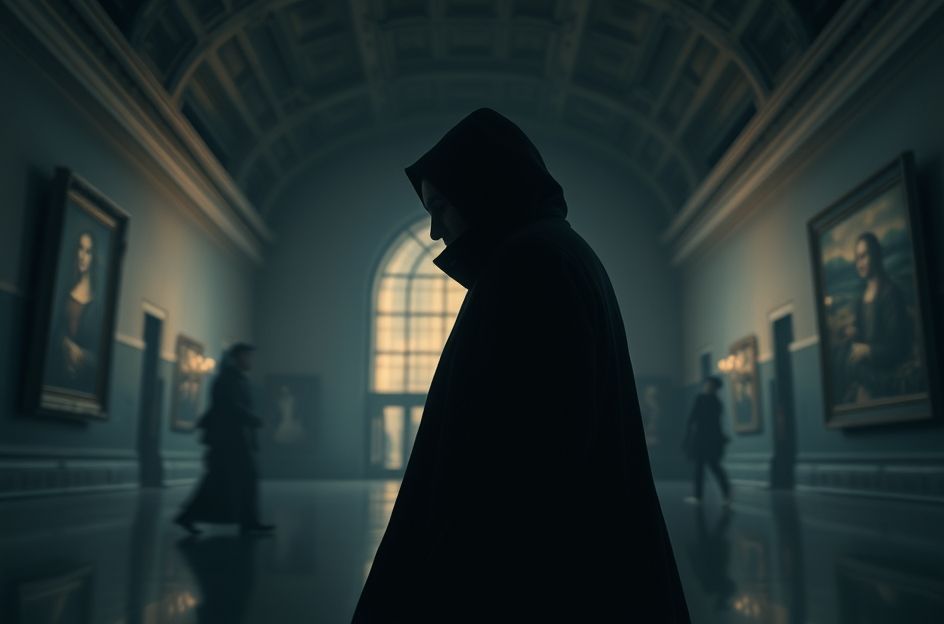
Art theft, a crime as old as art itself, often involves intricate plots, cunning art dealers, skilled forgers, and even the shadowy figures of organized crime. The pursuit of priceless masterpieces has led to some of history’s most daring and unforgettable heists.
The First Recorded Art Theft:
The earliest documented case dates back to 1473. Two panels from Hans Memling’s altarpiece, “The Last Judgment,” were stolen when the ship transporting them from the Netherlands to Florence was attacked by pirates. The panels ended up in Gdansk Cathedral, Poland, and are now displayed at the National Museum in Gdansk.
The Mona Lisa: A World-Famous Theft:
Perhaps the most well-known art theft is that of the Mona Lisa. On August 21, 1911, the masterpiece vanished from the Louvre Museum. Suspicion initially fell on Pablo Picasso, who was questioned but quickly released. The perpetrator was Vincenzo Peruggia, a Louvre employee who simply walked out with the painting hidden under his coat. However, Peruggia was part of a larger scheme orchestrated by con man Eduardo de Valfierno, who planned to sell forgeries as the original. Art forger Yves Chaudron created copies while the real Mona Lisa remained hidden in Peruggia’s apartment. After two years, Peruggia attempted to sell the painting to an art dealer in Florence but was apprehended. The Mona Lisa was recovered in 1913 and returned to the Louvre.
The Gardner Museum Heist: America’s Biggest Art Loss:
The largest art theft in U.S. history occurred at the Isabella Stewart Gardner Museum in Boston on March 18, 1990. Thieves disguised as police officers stole thirteen works valued at approximately $300 million. The stolen items included paintings by Rembrandt, Vermeer, Manet, Degas, and Govaert Flinck, along with a French artifact and a Chinese bronze. The paintings remain missing, and the case is still unsolved. Theories suggest involvement of the Boston Mob and French art dealers.
The Scream: A Recurring Target:
Edvard Munch’s “The Scream” has been a frequent target for art thieves. It was first stolen in 1994 from an Oslo gallery during the Winter Olympics. The thieves left a note mocking the museum’s security. Months later, the thieves offered to return the painting for a $1 million ransom. The Norwegian government refused, but a sting operation involving Norwegian and British police, along with the Getty Museum, led to the painting’s recovery.
In 2004, “The Scream” was stolen again, along with another Munch painting, from the Munch Museum. Although rumors circulated that the paintings were burned, they were recovered by Norwegian police on August 31, 2006. The details of the recovery remain undisclosed.