
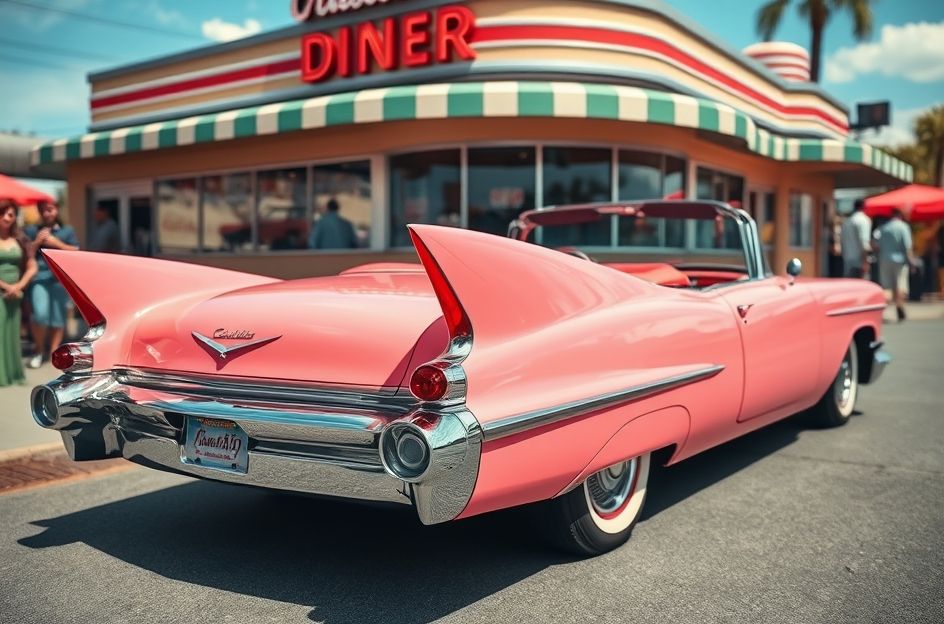
The 1950s were a golden age for automotive design, fueled by post-war optimism and a desire for prestige and glamour. With Elvis Presley as a cultural icon, whatever he drove became instantly desirable, particularly cars with the era’s defining feature: tailfins.
The allure of these vehicles extended beyond celebrity endorsement. They offered a sense of luxury and elegance to the average working person, embodying a romantic vision of the open road.
Early examples, like the 1950 Chrysler Town & Country Newport coupe, lacked the prominent fins that would soon dominate the landscape. However, its distinctive wood framing, earning it the nickname ‘Woodie,’ set it apart from its predecessors and appealed to outdoor enthusiasts.
Pontiac distinguished itself with a unique mascot: an Indian Chief whose chrome headdress flowed back over the hood and trunk. This gave the car a personality that resonated with consumers.
As the decade progressed, car designers pushed the boundaries of creativity. By the late 1950s, designs became increasingly extravagant, with sharp, chrome-laden fins dominating the overall aesthetic. Bright colors like yellow, red, and baby blue were all the rage, and convertibles were popular regardless of climate.
The intense competition among manufacturers led to rapid model turnover and planned obsolescence. Consumers faced constant pressure to upgrade to the latest styles. To minimize costs, automakers often retained the same mechanical underpinnings while focusing on dramatic exterior changes.
By 1958, some designs, such as the 1958 Oldsmobile, were criticized for their ungainly appearance. Yet even these models often featured eye-catching chrome accents.
Ultimately, the era of glamour cars reached its peak and began to decline. The 1960s ushered in a new focus on performance, fuel efficiency, and practicality. While the extravagant designs of the 1950s faded from prominence, they remain an unforgettable symbol of a bygone era, forever linked to the cultural landscape and icons like Elvis Presley.