
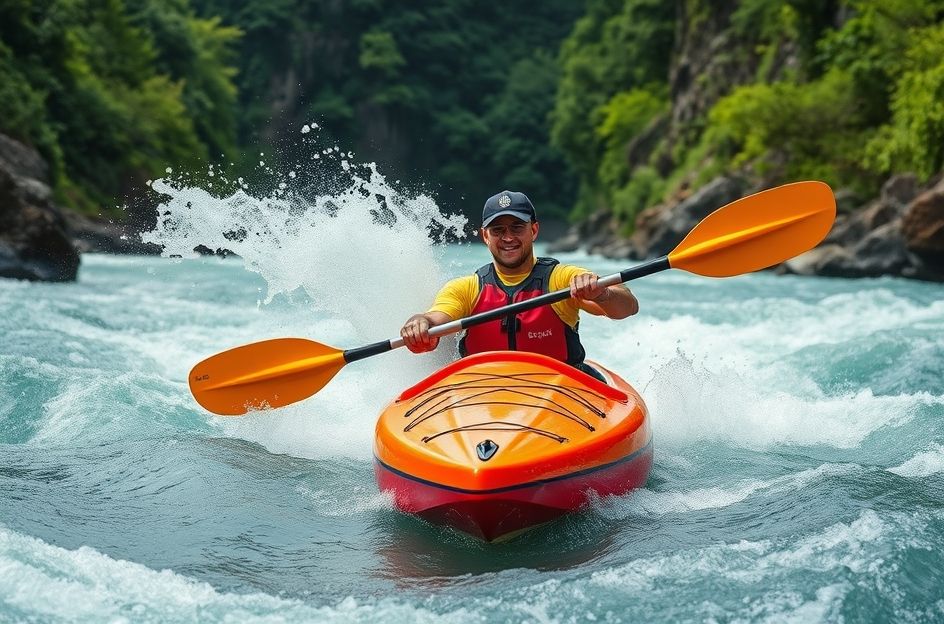
Kayaking involves using a kayak to navigate rivers, lakes, and oceans. These small, human-powered boats, characterized by a covered deck and cockpit, are propelled by a double-bladed paddle. Originating with the Inuit and Aleut hunters of North America’s Arctic regions over 4,000 years ago, kayaks have evolved from essential hunting tools to a popular recreational activity and competitive sport.
Modern kayaks accommodate one to three people, though single and tandem kayaks are more common. The kayaker sits facing forward in the cockpit, often using a spray skirt to prevent water entry. Historically, Inuit and Aleut men designed kayaks for hunting, while women sometimes used specially designed versions.
Today’s kayaks are crafted from diverse materials like fiberglass and Kevlar, replacing traditional wood and animal skins. Kayaking encompasses various disciplines, including sea kayaking and whitewater kayaking. Whitewater kayakers navigate challenging river sections, undertaking trips lasting from a single day to multiple days. Whitewater racing is a competitive sport where kayakers race against each other through rapids and obstacles.
Creeking, a specialized form of whitewater kayaking, involves navigating extremely difficult rivers with waterfalls, slides, and ledges. Slalom kayaking tests speed and precision as racers navigate a course downstream, passing through strategically placed gates (poles suspended over the water). Playboating emphasizes freestyle maneuvers and artistic expression, with kayakers performing tricks in a single section of the river, utilizing the current to their advantage.
While kayaking is a popular activity in regions with strong rivers, it can be dangerous. Participants should always prioritize safety, especially when navigating challenging waterways.