
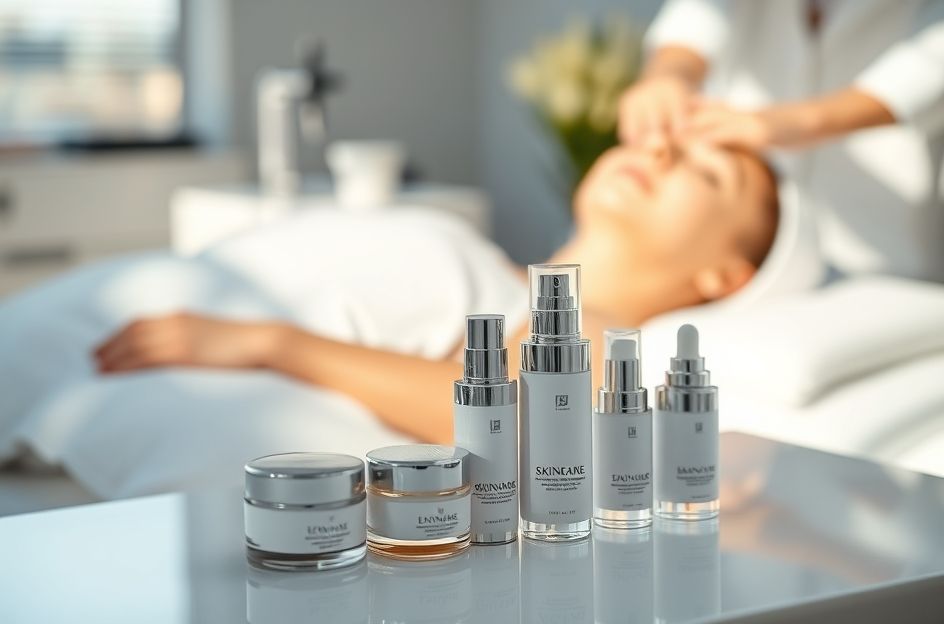
The integration of ancillary services is a rapidly expanding trend in medical practices. Rising operational costs have prompted physicians to explore avenues for expansion and enhanced patient care. The medical spa concept, or medspa, is becoming increasingly prevalent across the United States and beyond. While seemingly new, the concept has been practiced in European wellness spas for decades, offering a comprehensive suite of services.
Medspas leverage the expertise of physicians, nurses, estheticians, and massage therapists. According to Jane Crawford, a renowned medical spa consultant and educator for the American Society for Aesthetic Plastic Surgery (ASAPS), a strong correlation exists between spa clients and patients seeking plastic surgeons or dermatologists, driven by a heightened awareness of their appearance. This multi-billion dollar industry has extended into healthcare to address the growing need for specialized expertise in managing the aging process.
Skincare products used in medspas are often subject to rigorous standards. Over-the-counter (OTC) products must undergo regular FDA inspections, maintain detailed formula documentation, and adhere to strict product handling and quality control procedures. Compliance with protocols for raw material inspection, quality assurance, compounding, and final product filling is crucial. Microbial testing is performed on each batch after mixing and again after container filling to guarantee freshness and quality. Clinical studies are sometimes conducted to further validate product efficacy.
Bringing a skincare product to market typically involves months, or even years, of extensive research and development. Ingredients like peptides, beta glucans, polysaccharides, antioxidants, wound healers, enzyme inhibitors, tyrosinase inhibitors, and various extracts derived from marine, animal, plant, and biotechnological sources are carefully selected and tested. Research reports and clinical assays on isolated active ingredients are readily available from raw material suppliers. Scientific investigations into the benefits of isolated ingredients are often carried out at universities and research facilities, including both in vivo and in vitro studies.
Modern science has, in many cases, validated traditional knowledge. The beneficial properties of numerous botanicals, documented centuries ago, have been subjected to scientific scrutiny in the 20th and 21st centuries, with modern testing methods either confirming or refuting their efficacy. Many natural materials possess genuine therapeutic benefits.
It’s important to recognize that many cosmetic ingredients are not new. They have been used effectively in formulations for a long time and have a proven track record. Their properties must be thoroughly understood to ensure their proper application in formulations. Comprehensive information on cosmetic ingredients can be found in The International Cosmetics Ingredient Dictionary and Handbook, published by the Personal Care Products Council (PCPC), formerly known as the Cosmetic, Toiletry and Fragrance Association (CTFA). The PCPC also maintains close oversight of the cosmetic industry.
*Disclosure: The author is a cosmetologist and licensed esthetics instructor with experience in both private practice and medical settings.*