
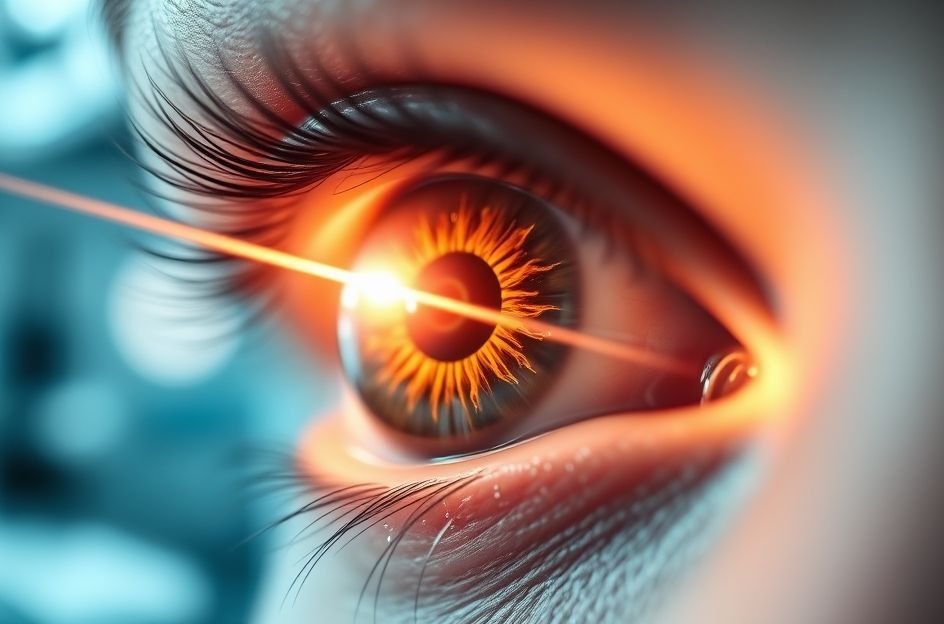
Tired of glasses or contacts? Millions are turning to LASIK surgery for vision correction. But what’s causing the problem in the first place? The culprit is often the cornea. An irregularly shaped cornea blurs the image projected onto your retina. The cornea’s job is to focus light, a process called refraction. Refractive errors include myopia (nearsightedness), hyperopia (farsightedness), and astigmatism. Nearsighted individuals struggle with distant objects, while farsighted individuals have trouble seeing up close. Astigmatism results from corneal or lens irregularities, distorting the retinal image. Many people experience a combination of these errors. Before LASIK, glasses and contacts were the primary solutions.
So, what is LASIK? LASIK, or Laser-Assisted In Situ Keratomileusis, involves reshaping the cornea. The laser reshapes the cornea to alter the angle at which images are perceived, thus improving vision. This process strengthens the cornea’s focusing power for near and far objects. For nearsightedness, the laser flattens a cornea that is too steep. For farsightedness, the laser steepens a cornea that is too flat. In cases of astigmatism, the laser smooths irregularities.
Convinced and curious about next steps? Start by talking to friends, family, and colleagues who have undergone LASIK. Inquire about their experiences, recovery time, costs, and whether they’d recommend their surgeon. Gather this information and research potential surgeons for a consultation. Ask thorough questions and keep detailed notes. This is your first step towards potentially clearer vision with LASIK surgery.