
Perfume has been an integral part of human culture for millennia. Despite fluctuating hygiene standards throughout history, the desire to smell pleasant has remained constant, leading to the creation and evolution of perfume.
But what exactly *is* perfume? While we often envision scented liquids in elegant glass bottles, the origins of perfume are far more ancient and intriguing. Let’s delve into the history of perfume and uncover its fascinating journey through time.
The term “perfume” originates from the Latin phrase “per fumus,” meaning “through smoke.” This etymology hints at perfume’s earliest form: incense. Ancient civilizations, dating back to Egypt over 3500 years ago, burned incense to scent the air. This practice was primarily reserved for the wealthy and priests, who used it in their homes and religious ceremonies, respectively.
Incense was considered a luxury item due to the laborious process of its creation. The preparation involved grinding various barks, twigs, leaves, and flowers into a powder, a time-consuming task that contributed to its high cost. The ingredients used in perfumes and incenses were primarily derived from plant sources. Aromatic woods like cedar and mesquite, fragrant flowers, and leaves were combined with oils and wines to create desired scents. Generally, solids were used for incense, while liquids were used for perfumes.
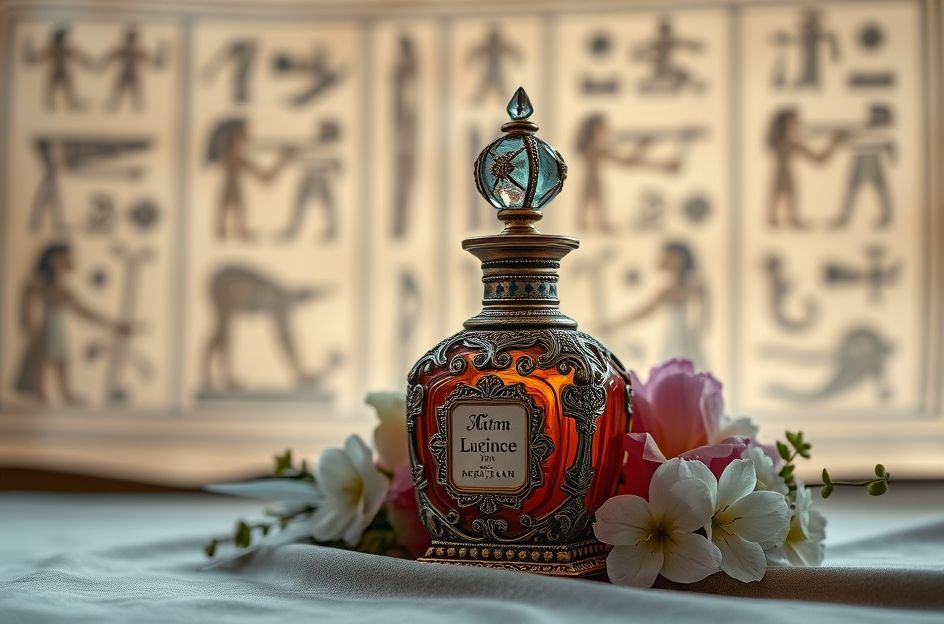
The ancient Egyptians also utilized liquid scents, incorporating oils and flower extracts into their bathing rituals. This practice spread throughout Egyptian society, influencing the public baths of Greece and Rome. Egyptians also paid close attention to the design of perfume bottles and jars, using materials such as ceramic, pottery, and glass.
The Greek and Roman civilizations adopted the practice of using scented oils, particularly as part of their bathing routines. Olive oil was a common base for men’s fragrances, providing both a pleasant scent and protection from the sun in the hot Mediterranean climate.
During the Middle Ages, Arab chemists revolutionized perfume production by developing a method to extract essential oils from flowers. These essential oils, the “essence” of the scent, proved to be superior for creating scented perfumes, especially liquid ones.
Arab traders introduced essential oils to Europe during the Renaissance, where perfume makers quickly recognized their value. Perfume became a popular way to mask unpleasant odors, particularly in France. The court of Louis XV became known as the “perfumed court” due to the widespread use of fragrance. It was in France that the practice of applying perfume to women’s wrists originated.
Beyond the royal court, perfumed gloves and wigs became fashionable. The white wigs worn by gentlemen in colonial America were often perfumed with powder.
The use of essential oils, primarily from floral sources, continues in modern perfume production. One significant difference between contemporary fragrances and those of the 1700s lies in the bottles. Modern glass perfume bottles, often considered miniature works of art, were popularized by French-Corsican perfume maker Francois Coty in the late 19th and early 20th centuries. Coty’s marketing genius led him to sell his perfumes in small, attractive glass bottles, partnering with a glass maker to achieve this vision.
[Placeholder for YourDiscountPerfume.com – Adapt to current promotional focus without repeating text from original]
Discover the world of fragrance at [Your Company Name] where you’ll find a wide selection of perfumes at competitive prices. Browse our collection at your own pace and find the perfect scent to match your style.