
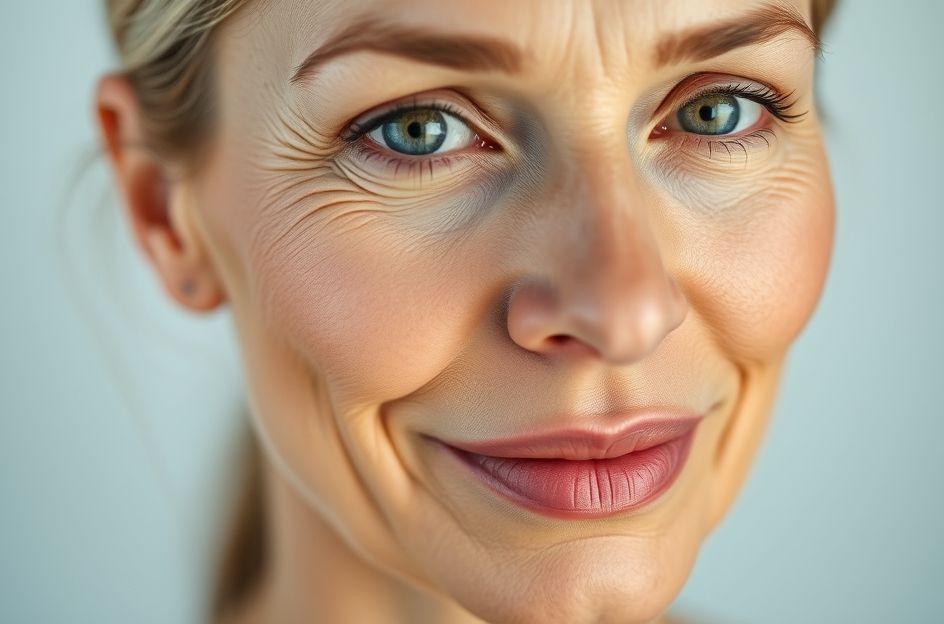
Facial lines and wrinkles, clinically known as rhytides, are a natural part of skin aging. They result from a combination of factors, including the irregular thickening of the dermis and a decrease in the epidermis’s moisture content. While aging is inevitable, several elements influence the severity of these changes.
Genetics, skin type, environmental exposure, and lifestyle choices all play a significant role. Common culprits beyond natural aging include sun damage, repetitive muscle movements, gravity, surgical procedures, injuries, acne, and skin diseases like discoid lupus. Smoking and exposure to environmental toxins, such as smog and dust, also accelerate wrinkle formation.
Facial lines often exhibit asymmetry due to habitual expressions like smiling, smirking, or frowning more on one side of the face. Even sleeping predominantly on one cheek can contribute.
Furrows are deeper, more pronounced lines, classified as either dynamic or static. Dynamic lines appear with facial muscle movement. Over time, these dynamic lines transition into static lines, becoming permanently etched into the skin, regardless of muscle activity.
Common examples of furrows include crow’s feet around the eyes (caused by smiling and eyelid muscle activity), worry lines on the forehead (due to the contraction of the frontalis muscle when raising the eyebrows), and frown lines between the eyebrows (resulting from the contraction of the corrugator supercilii and procerus muscles when frowning or concentrating).
Sagging skin is another age-related concern. It occurs due to a reduction in subcutaneous fat cells, loss of collagen and elastin fibers, and the relentless pull of gravity. These factors lead to skin laxity or drooping, particularly noticeable in the forehead, upper and lower eyelids, cheeks (creating a hollow appearance), jowls, neck, earlobes, the tip of the nose, and the upper lip.
Dermatologists and cosmetic surgeons use established classifications to assess skin aging.
The Glogau scale categorizes aging as: Mild (few wrinkles, minimal makeup needed), Moderate (early wrinkling, sallow complexion, light makeup use), Advanced (persistent wrinkles, skin discoloration, broken blood vessels, solar keratoses, regular makeup use), and Severe (severe wrinkling and furrows, solar keratoses, makeup ineffective in concealing changes).
The Fitzpatrick classification focuses on wrinkles around the mouth and eyes, grading them as: Class I (fine wrinkles), Class II (fine to moderately deep wrinkles, moderate number of lines), and Class III (fine-to-deep wrinkles, numerous lines, and potential redundant folds).
Fortunately, cosmetic care and surgery have made significant advancements in addressing wrinkles and lines. Achieving a more youthful appearance and improved complexion is now within reach.
The best results often involve a combination of cosmetic procedures, ranging from topical retinoids and anti-aging formulas enriched with vitamins, alpha-hydroxy acids, and plant extracts, to resurfacing techniques like chemical peels, dermabrasion, and thermage.
Implants, in the form of temporary or permanent fillers or grafts, can lift individual lines and furrows. BOTOX® treatments can temporarily paralyze muscles responsible for frown lines, crow’s feet, and forehead lines. Additionally, cosmetic surgery offers various facelift techniques to address sagging tissues.