
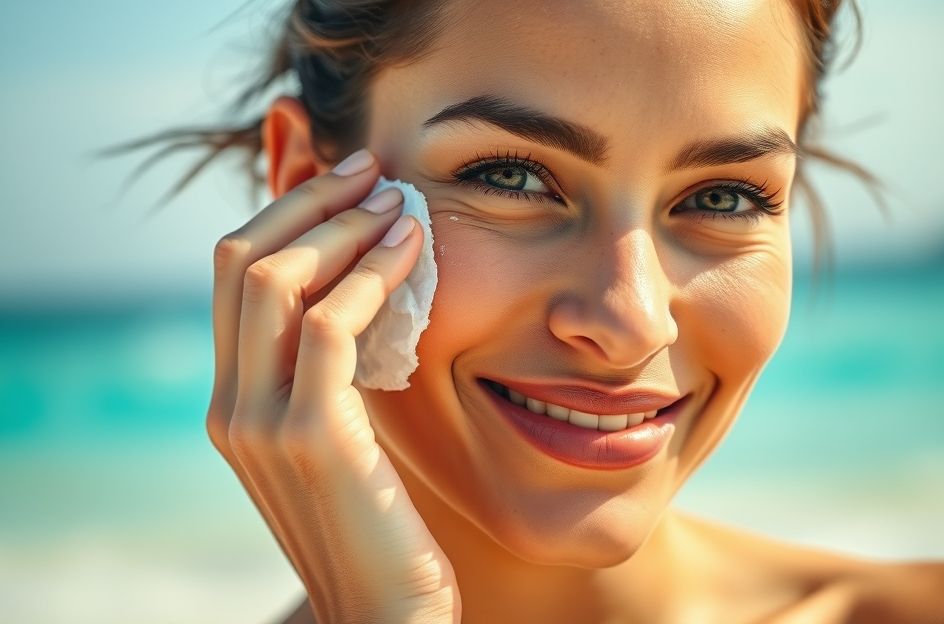
The sunscreen market is a multi-billion dollar industry, yet many Americans fail to adequately protect themselves from the sun’s harmful rays. While awareness of the link between sun exposure and skin cancer and premature aging is growing, the effectiveness and safety of many sunscreens are questionable.
The Environmental Working Group (EWG) reports that a significant percentage of high-SPF sunscreens fail to provide adequate protection against all harmful rays, lose effectiveness quickly, or contain chemical ingredients that may do more harm than good.
The sun is a major contributor to skin aging, accounting for ninety percent of the visible signs. UVA, UVB, and UVC rays all pose different threats. While the ozone layer blocks UVC rays, UVB rays burn the skin and contribute to skin cancer. UVA rays penetrate deeper, damaging collagen and elastin, leading to wrinkles, sagging, and premature aging.
Effective sunscreens should protect against both UVA and UVB rays, safeguarding the skin’s surface and underlying collagen and elastin layers.
Paradoxically, in an attempt to achieve higher SPF levels, many sun care companies increase the concentration of chemical compounds in their products. Research from the University of Southern California suggests that certain sunscreen chemicals can soak into the skin and promote the very harmful compounds they are intended to protect against.
The research indicated that common UV filters like octomethoxycinnamate, benzophenone 3, and octocrylene can penetrate the deeper skin layers, leaving the upper layers vulnerable. UV rays absorbed by the skin can generate reactive oxygen species (ROS), which contribute to skin cancer and premature aging. The study found that these filters, once absorbed, can react with UV light to create even more damaging ROS.
While the United States bans only a handful of ingredients from skincare products, Europe bans over a thousand. Consumers seeking safer sunscreens may want to explore products that prioritize pure, safe ingredients without harmful chemicals. Look for sunscreens that:
-Provide broad-spectrum UVA and UVB protection.
-Contain anti-aging elements.
-Incorporate ingredients like Vitamin C and Magnesium to promote collagen and elastin production.
-Include peptides to enhance the skin’s natural ability to build collagen and elastin.