
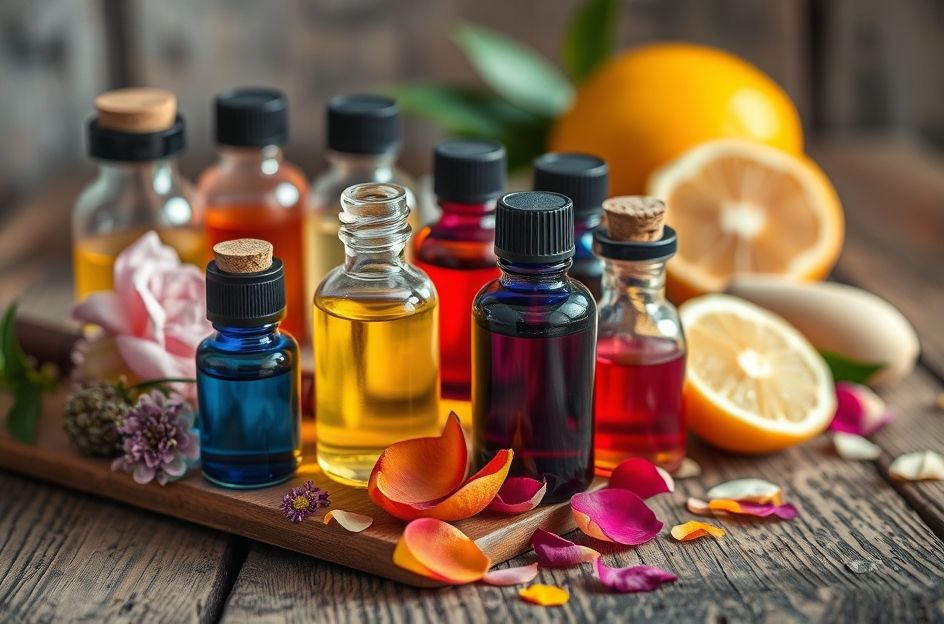
Did you know that when you buy a bottle of perfume, a significant portion of the cost goes towards packaging, advertising, sales profit, and taxes? Surprisingly, only a small percentage, around ten percent, is actually attributed to the fragrance oils themselves. This begs the question: why not create your own custom perfume?
Making your own perfume isn’t just a cost-effective alternative; it’s a journey of discovery towards creating a fragrance that perfectly reflects your unique personality. One major advantage is the control you have over the ingredients. By opting for natural ingredients, you can avoid harsh chemicals and preservatives that are often found in commercial perfumes. This reduces the risk of adverse reactions from synthetic materials.
However, caution is still advised when working with essential oils. Certain oils can trigger allergic reactions in some individuals. Before experimenting with different blends, it’s essential to understand your own body chemistry and any potential sensitivities.
Let’s clarify the different types of fragrance concentrations. Perfume is essentially a blend of aromatic compounds dissolved in alcohol and water. The concentration of aromatic oils determines whether the product is classified as a perfume, eau de parfum, eau de toilette, eau de cologne, or body splash. The order from highest to lowest concentration is as follows: perfume, eau de parfum, eau de toilette, eau de cologne, and body splash.
Perfume boasts the highest concentration of aromatic oils, ranging from 25% to 40%. Eau de parfum contains 15% to 30% aromatics, while eau de cologne has a lighter concentration of 5% to 15%. Body splash, also known as toilet water, contains only 3% to 5% aromatics and is best used after showering.
When crafting your own perfume, you have the freedom to choose your preferred solvent, such as jojoba oil or alcohol. Jojoba oil is an excellent choice because it doesn’t turn rancid. Alternatively, you can use grain alcohol or high-proof vodka to dilute the blend. Alcohol makes the fragrance more volatile, allowing it to diffuse more readily. However, it’s crucial to let the perfume mature after blending, otherwise the alcohol scent may overpower the other notes. A typical ratio is 3-4 ml of fragrance blend combined with 5-10 drops of alcohol.
Creating your own perfume should be an enjoyable and creative process. Don’t get bogged down in technicalities. Instead, explore unconventional combinations and trust your intuition. You never know; you might discover the perfect fragrance that harmonizes perfectly with your body chemistry. Remember that scents interact uniquely with each individual’s skin. Finding the right perfume is like choosing the perfect outfit or pair of shoes—it should complement you and enhance your natural essence. Experiment with different combinations until you discover a fragrance that truly resonates with you.