
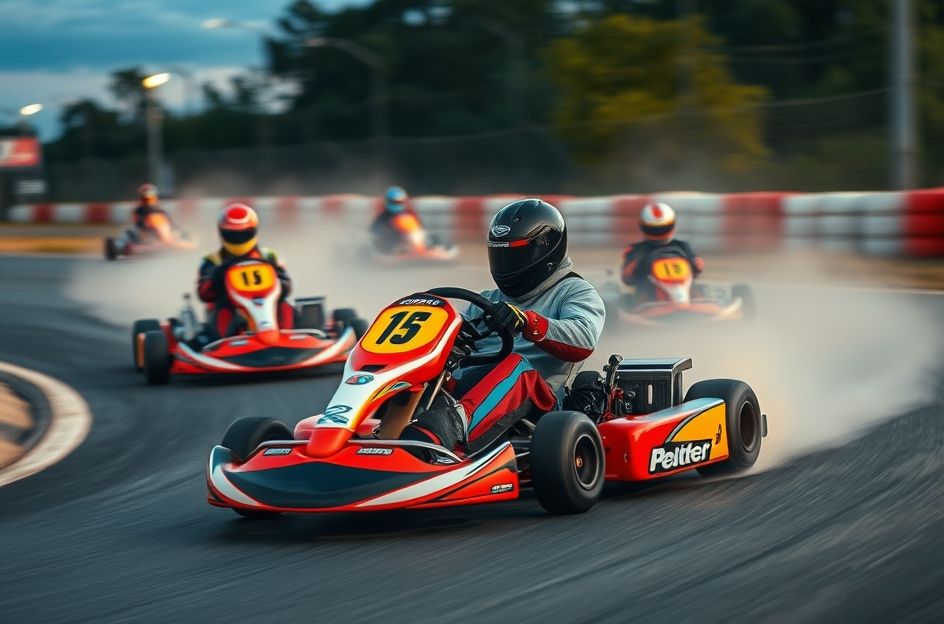
From a simple pastime for 1950s airmen to a global motorsport phenomenon, go-karting has rapidly captured the hearts of adrenaline seekers worldwide. Art Ingels is widely credited with building the first go-kart in 1956. Modern go-karts have evolved significantly, with top-tier models reaching speeds exceeding 160 mph. These miniature open-wheel machines are known by various names, including go-carts, shifter karts, and enduro carts, but they all offer an unparalleled racing experience.
Go-karting shares a direct lineage with Formula One and IndyCar racing, providing an accessible gateway to the thrill of professional motorsport. Many racing legends, including Michael Schumacher, Sarah Fisher, Darrell Waltrip, Tony Stewart, and Kyle Petty, honed their skills in go-karts, demonstrating its importance in driver development. With potential speeds rivaling those of professional race cars, go-karting offers a taste of the big leagues.
While various exciting recreational vehicles exist, such as ATVs, dirt bikes, and motorcycles, go-karts deliver the closest sensation to Formula 1, NASCAR, or IndyCar racing. These small, four-wheeled vehicles lack suspension, relying instead on chassis flex for grip. Their design mirrors that of professional open-wheel race cars, only in a more compact form.
Aspiring professional racers often begin their journey in go-karts, which serve as a stepping stone to Formula One or IndyCar careers. Go-karting features multiple classes catering to all skill levels, allowing drivers to progress and refine their abilities. Success in go-karting can indicate a potential for success in higher levels of racing.
Compared to professional racing, go-karting offers a more budget-friendly entry point. It allows drivers to test their abilities without incurring exorbitant costs. However, go-karting’s appeal extends beyond professional aspirations. It is enjoyed by people of all backgrounds seeking fun and excitement. Go-karting facilities are prevalent in most major cities, providing accessible entertainment for everyone.
A go-kart comprises a chassis, engine, transmission, seat, and four tires. The chassis is crucial, providing both stiffness and flexibility for optimal grip. Chassis designs vary, with open or caged options available. Caged chassis offer enhanced driver protection in case of rollovers, similar to the function of a roll bar.
Go-kart engines typically use either 2-stroke or 4-stroke configurations from manufacturers like Honda and Briggs & Stratton. Contrary to expectations, 2-stroke engines often deliver more power than their 4-stroke counterparts.
Go-kart speeds vary, with sprint karts reaching approximately 60 mph, enduro karts reaching 90 mph, and shifter karts exceeding 160 mph. Shifter karts employ manual transmissions with clutches, enabling drivers to maximize engine output.
Every go-kart component offers specialized options. Tire selection is crucial, with slicks used for dry conditions, rain tires for wet conditions, and even spiked tires for ice racing, which takes place in some regions.
Go-karting provides a spectrum of competitive levels, ensuring a comfortable fit for all drivers. Talented and dedicated individuals have the opportunity to progress significantly and potentially race alongside motorsport icons like Tony Stewart.