
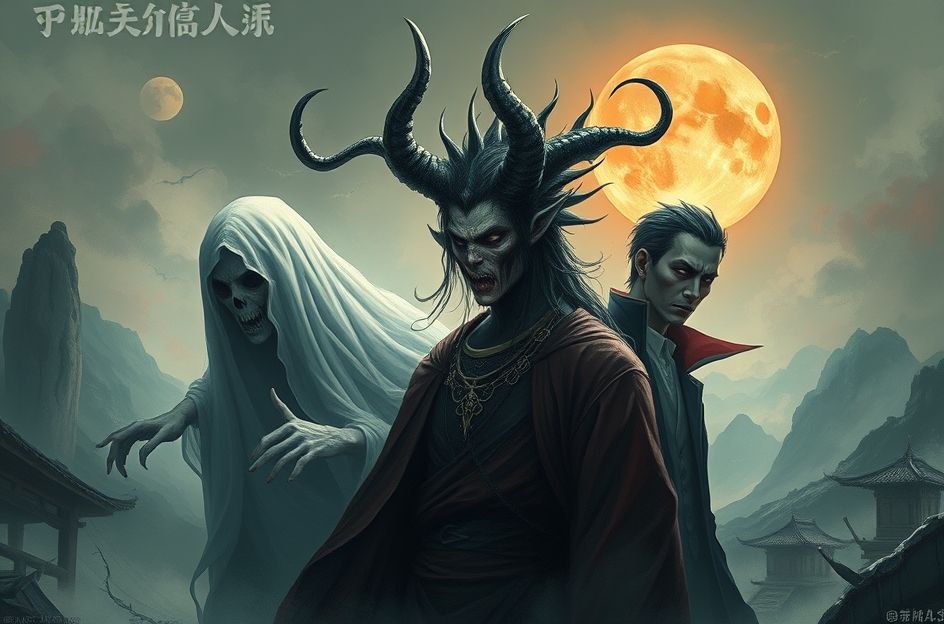
Death, a universal experience, profoundly influences art and culture worldwide. The transition from life to death has become a common subject of artistic expression, inspiring diverse beliefs about the afterlife. This fascination is understandable, as both the dying and their loved ones often grapple with anxiety and grief. Tales of the undead, prevalent across continents, may reflect humanity’s attempt to cope with separation anxiety and mortality.
Ghosts, a common manifestation of the undead, are often depicted as incorporeal beings tethered to earthly attachments, unable to fully detach from their past lives. Their unwillingness to move on allows them to interact with the living world. Western ghosts primarily affect the mental state of the living, while Chinese ghosts are often portrayed as capable of inflicting physical harm.
The concept of undeath extends beyond spirits to include reanimated corpses like zombies, brought back through arcane rituals. Norse mythology features draugr, corpses that resist burial. These creatures often evoke fear, possibly stemming from cultural and religious norms dictating that the dead should remain still. An animated corpse violates these expectations, becoming a source of terror.
However, creatures like the Romanian strigoi, or vampires, blur the lines between spirit and flesh. These beings possess the body and soul of the deceased but require sustenance to maintain their existence. While the substance varies across cultures – blood in Europe, feces or bones in Africa – these creatures traditionally inspire fear. Despite the romanticized portrayal of vampires in modern media, most variants remain figures of horror.
Eastern cultures offer unique takes on the vampire archetype. The jiang shi of China, or hopping corpses, drain chi, the essence of life, from the living, resulting in a bloodless victim. The gaki of Japan are similar but more human-like, taking chi directly and leaving the victim appearing to have died peacefully.
Regardless of their form, the undead serve as potent symbols in global folklore. They embody the fear of death and separation anxiety, while also acting as allegories for societal taboos and the consequences of violating cultural and religious norms. Although pop culture has, in some instances, softened their image, the undead remain a reflection of humanity’s complex relationship with mortality.