
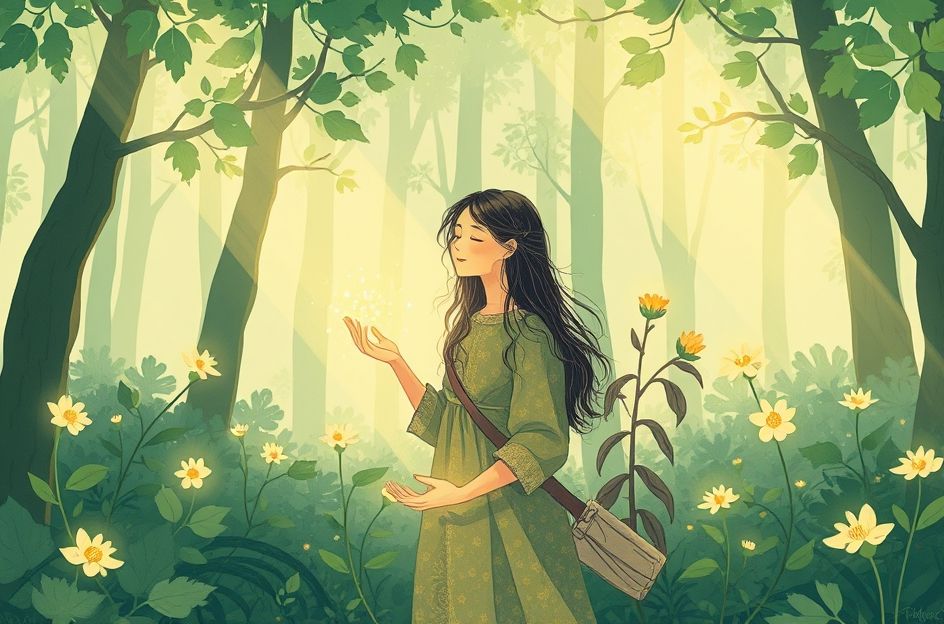
Traditionally, healing was viewed as an art form, a complex interplay between the patient, the healer, the living community, the natural world (plants, animals, and even inanimate objects), the realm of ancestors and spirits, and a higher power. This art encompassed a deep understanding of human behavior, plant properties, performance skills (singing, chanting, and costuming), and knowledge of anatomy, physiology, and biochemistry.
Art and science aren’t mutually exclusive. Science, at its best, is a method of honestly testing ideas and observing cause-and-effect relationships. Scientific progress often relies on intuition and artistic insight, recognizing the value of both logical and creative thinking.
However, science can sometimes dismiss art as mere superstition, lacking the rigor and replicability it demands. While a liberal arts education often includes scientific study, scientific institutions don’t always require arts education. Science often defines itself as factual, contrasting itself to the perceived fantasy of art.
Truly insightful scientists recognize the importance of intuition alongside data. However, the prevailing trend is a devaluation of the art of healing in favor of scientific approaches. Healers increasingly interact with machines and medications, spending less time directly with patients. The focus shifts from understanding the patient’s need for wholeness within themselves, their families, and communities to solely fixing the individual’s ailment.
Herbalism risks becoming mere biochemistry, with pharmacists potentially losing touch with botany. Herbs are marketed as “green drugs,” with the “active ingredient” being the sole focus.
This approach doesn’t resonate with the core of herbal medicine. While acknowledging the value of scientific research, we must uphold the intuitive aspects of healing. We must defend the traditions of miracle-workers, shamans, and herbalists who possess the skill, personal strength, and courage to guide people through life’s transitions.
Herbal medicine, magical plants, and psychoactive plants share a connection extending back tens of thousands of years. Plants have long been considered communicative partners. Evidence suggests that our ancestors utilized psychedelic plants in healing practices. Renowned shamans, like Maria Sabina, have demonstrated the profound healing potential of psychoactive plants in addressing both physical and spiritual needs. Even today, students of herbalism in some traditions apprentice themselves to psychoactive plants as part of their training.
Currently, there is excessive focus on isolating “active ingredients” in plants. Advertisements tout products with the “most” of a particular compound, only to be superseded by the discovery of a “better” ingredient. Consider Kyolic Garlic, which, after a report showed it had very little allicin, was marketed as superior due to a different active compound. Similarly, St. John’s Wort extracts are often standardized for hypericin, despite research suggesting hyperforin is the primary active component.
A study in JAMA on Ginkgo biloba for dementia noted that the herb’s effects likely stem from a complex interaction of multiple compounds, rather than a single “active ingredient.” Despite this, a New York Times article cautioned against using Ginkgo until such an ingredient was identified.
Personal experience highlights this issue: an MD stated that herbs are unsafe unless their active ingredient is measured and standardized. However, for many herbalists, the true active ingredient is immeasurable—the plant’s energy, life force, and essence. This vital element is often lost during standardization, as it resides in the complex, changeable, and subtle aspects of the plant.
Does science have a role? Absolutely! Science excels at identifying, replicating, and mass-producing plant compounds as pharmaceuticals – a process that herbalists cannot duplicate. Standardized drugs offer consumer protection and can help prevent overharvesting (although environmental impacts may still exist).
Let science safeguard the purity of commercially traded herbs, while art preserves the purity of those we gather ourselves. When harvesting, keep plant types separate to avoid accidental mixing.
This story is ongoing. The interplay of health and illness, art and science, and commerce is continuous. The ending is neither entirely positive nor negative. The true resolution resides within ourselves.