
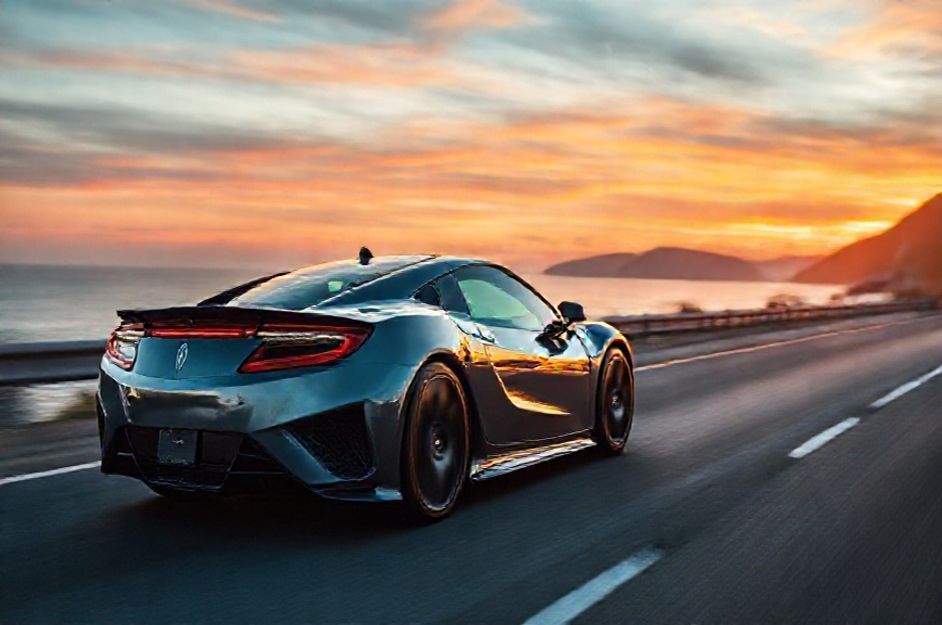
In March 2006, Honda Motor Company marked the 20th anniversary of Acura, its luxury vehicle division. Acura was established to provide Honda enthusiasts with a premium option, successfully broadening the company’s reach beyond mainstream models like the Civic and Accord. Today, Acura has evolved significantly since its inception in 1986.
In 1981, Honda recognized an opportunity to cater to American consumers seeking luxury vehicles. While Mercedes-Benz and BMW gained popularity in the U.S., domestic luxury brands like Cadillac and Lincoln experienced declining market share. Honda, already well-regarded for its existing models, considered marketing more upscale vehicles a viable strategy.
Honda management understood that Acura vehicles needed to differentiate themselves to justify higher prices. Simply rebadging Honda models wouldn’t suffice. Instead, each Acura was specifically designed and engineered to compete with leading luxury cars of the time.
The initial Acura lineup included the Legend, a V6-powered sedan and coupe, and the Integra, a three-door coupe based on the Honda Civic platform. Later, the NSX two-seat sports car was introduced to challenge Porsche, and the Vigor sedan filled the gap between the Integra and the Legend.
Over time, model names were replaced with alphanumeric designations. The Vigor became the TL, the Legend became the RL, and the Integra the RSX. The current Acura lineup includes the MDX SUV, RSX sport compact, and TSX sedan, among other models. A smaller SUV, the RDX, was added to the Acura range later in 2006.
The future of Acura appears promising, despite intense global competition. Although Honda entered the luxury market before Nissan’s Infiniti and Toyota’s Lexus divisions, Acura has trailed its Japanese rivals for some time. Some critics suggest that this has hindered Acura, while others view it as a deliberate Honda strategy to expand the overall Honda brand.
Future developments for Acura may include diesel-powered vehicles and more hybrid options. Some automotive experts believe Honda could potentially surpass BMW and Mercedes-Benz by developing ultra-luxury sedans and sports cars. Acura’s success has been fueled by Honda’s reputation for quality combined with European-inspired styling, luxury, and engineering. Expanding this approach to larger or sportier models could propel Acura forward.
Acura has significantly altered perceptions of Japanese automotive brands by delivering vehicles that excel in luxury, engineering, and refinement. The past 20 years demonstrate that enthusiasts can anticipate even greater advancements from Acura in the coming decades.