
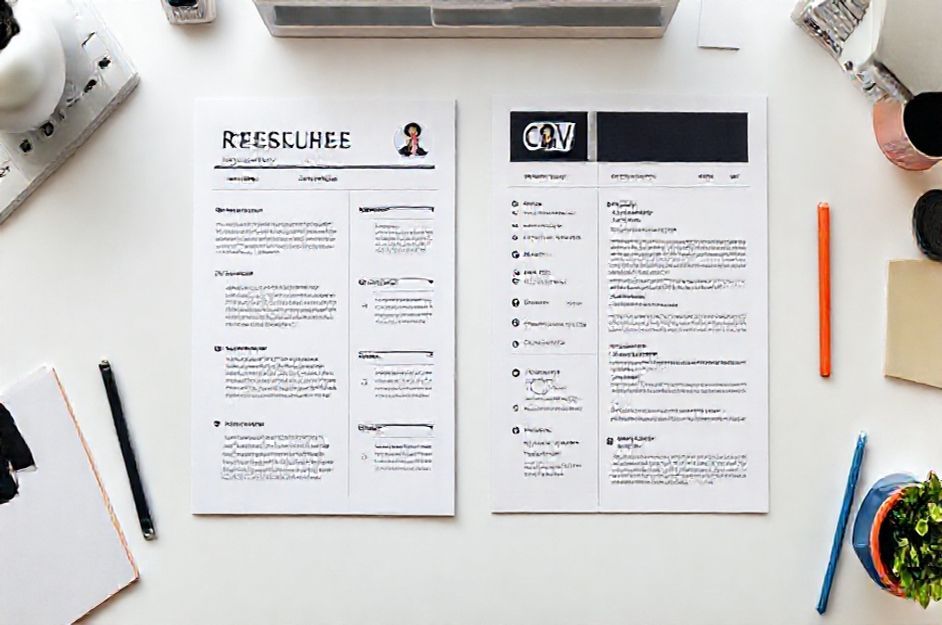
Navigating the job search landscape can be confusing, especially when it comes to understanding the difference between a resume and a curriculum vitae (CV). While both documents serve the purpose of showcasing your qualifications to potential employers and securing job interviews, they differ significantly in scope, content, and intended use.
**Resume: A Concise Overview**
A resume provides a succinct overview of your work experience, skills, education, and other relevant qualifications tailored to a specific job. There are three main types of resumes: chronological, functional, and combination. A chronological resume highlights your work history in reverse chronological order, emphasizing your career progression. A functional resume focuses on your skills and abilities, de-emphasizing your work history. A combination resume blends elements of both, showcasing both your skills and experience. For most job applications, a one or two-page combination resume is the most effective choice.
**Curriculum Vitae (CV): A Comprehensive Record**
A CV, Latin for “course of life,” is a comprehensive document that provides a detailed record of your academic and professional achievements. It is commonly used in academia, research, medicine, and international job applications. Unlike a resume, a CV has no page limit and includes information such as education, research experience, publications, presentations, awards, grants, and professional affiliations. The information is typically presented in reverse chronological order.
**Resume vs CV: Key Differences**
| Feature | Resume | CV |
| ————- | ———– | ———– |
| Length | Typically 1-2 pages | No page limit |
| Focus | Tailored to a specific job | Comprehensive record of achievements |
| Content | Summary of relevant skills and experience | Detailed information on education, research, publications, etc. |
| Use | Most job applications | Academia, research, medicine, international jobs |
**Which One Do You Need?**
For most entry-level positions, internships, and general job applications, a resume is the preferred choice. However, if you are applying for a position in academia, research, medicine, or an international job, a CV is typically required. When in doubt, carefully review the job posting or contact the employer to clarify their preference.