
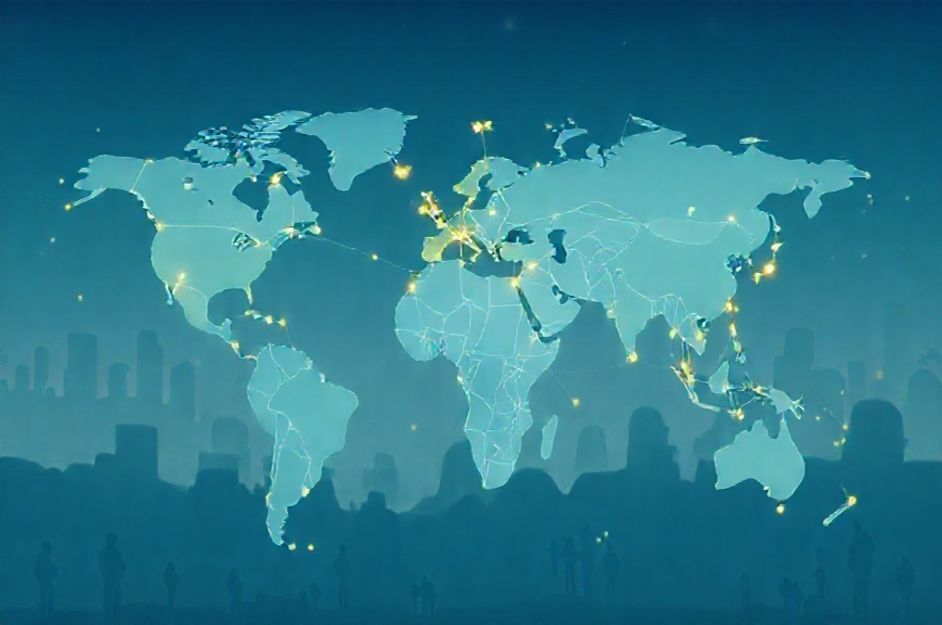
Globalization, a term frequently encountered in news and discussions, lacks a universally accepted definition. While various interpretations exist, ranging from cultural exchange to communication advancements, this analysis focuses on economic globalization, as defined by Bhagwati in “In Defense of Globalization.” He describes it as the integration of national economies through trade, foreign investment, capital flows, labor migration, and technology exchange.
Despite its potential benefits, globalization faces criticism. Concerns often revolve around its impact on poverty and inequality, fueled by media coverage and activist groups. Bhagwati identifies two types of critics: “stake-wielders,” who are often extremist protesters, and “stake-asserters,” who engage in reasoned dialogue. These groups raise valid points that warrant careful consideration.
A central debate concerns whether globalization exacerbates poverty. Proponents argue that increased free trade, facilitated by globalization, stimulates economic growth, creates jobs, and reduces unemployment. Bhagwati emphasizes the importance of expanding “the size of the pie” through international trade gains. While globalization may not directly target poverty, it can contribute to its alleviation. However, as Joel J. Toppen argues, the focus should remain on supporting the world’s poor.
Outsourcing, another contentious issue, sparks outrage when jobs are moved overseas. While it can enhance corporate profits and economic growth, critics question the ethics of exploiting foreign labor and the immediate impact on displaced domestic workers. Although overseas workers may experience increased real wages and improved living standards, the loss of American jobs requires attention. Bhagwati suggests that while lower-skilled jobs are outsourced, developed economies create higher-skilled jobs through education and technology.
To mitigate job losses, compensation programs can support displaced workers during transitions. Additionally, illegal immigration, often driven by economic disparities, presents a challenge. While open borders are economically unsustainable, governments must implement policies that integrate migrants into their new homes, maximizing economic benefits and minimizing social costs. This issue extends beyond specific borders and requires global cooperation.
Furthermore, the ease of capital flows in and out of economies poses risks. The IMF and OECD have pressured economies to lower barriers, leading to increased foreign investment. However, Stiglitz argues that the liberalization of financial markets can be detrimental to developing countries. Rapid capital outflows triggered by investor sentiment shifts can cause economic devastation. Therefore, some regulation of capital flows is necessary, even according to proponents of free trade like Bhagwati.
In conclusion, globalization is a complex phenomenon with both positive and negative aspects. By understanding its various dimensions and addressing its challenges, we can strive to harness its benefits while mitigating its risks, ultimately contributing to a more equitable and prosperous world.