
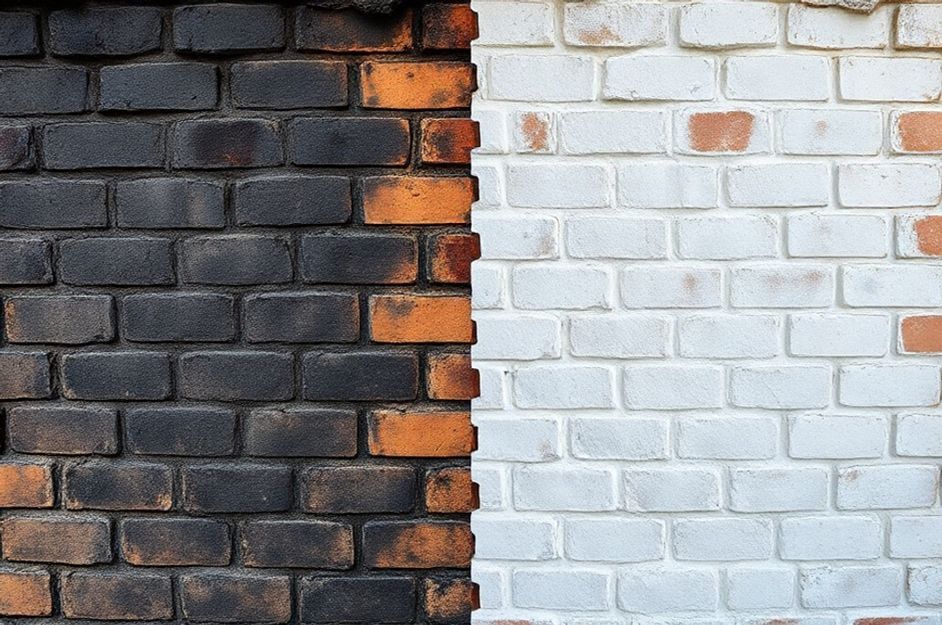
After a fire, the aftermath can be overwhelming. Once the fire department extinguishes the flames, you’re left with a significant mess. This raises crucial questions about the best approach to clean up and restore your property. Choosing the right method for soot and charcoal removal is paramount for effective damage assessment and long-term cost savings.
Traditional cleaning methods like high-pressure water blasting can trap moisture in electrical components and insulation, leading to corrosion and escalating repair costs. Similarly, soda blasting leaves behind residue that necessitates further cleanup. Sandblasting poses the risk of abrasive media infiltrating sensitive equipment, causing ongoing damage even after the initial cleaning.
Dry ice blasting emerges as the superior surface cleaning solution. This method eliminates secondary waste, leaving only fire-related debris for disposal. Its effectiveness extends to removing soot, charcoal, and smoke film from various surfaces, including masonry and steel. Numerous demonstrations are available online, showcasing its versatility and efficiency.
Addressing the pervasive smoke odor is another critical step. This involves eliminating or encapsulating the odor source. Dry ice blasting effectively removes soot, charcoal, and smoke film from accessible areas, directly targeting the source of the smell. However, smoke and soot can penetrate cracks and remote areas, potentially requiring additional cleaning or sealing of these inaccessible spaces.
Furthermore, dry ice blasting offers an environmentally conscious cleaning solution. It uses solid carbon dioxide (CO2), which transforms into its gaseous state naturally present in the atmosphere. The process is non-toxic, non-conductive, and eliminates worker exposure to hazardous chemicals. Dry ice blasting aligns with USDA, EPA, and FDA guidelines, making it a responsible choice for fire damage cleanup.