
The parcel shipping industry has undergone rapid transformation in recent years, largely driven by increasing customer expectations for speed and reliability, a phenomenon known as ‘shortening of the supply chain.’ This term encapsulates evolving consumer attitudes and innovative business strategies focused on minimizing delays and ensuring product availability.
Consumers now expect instant gratification, rejecting ‘out of stock’ notices, order processing delays, and protracted delivery times. To satisfy these demands, sellers must minimize inventory turnover, implement cross-docking strategies, and maintain comprehensive real-time inventory visibility. The ‘dot-com’ era established a benchmark of 24-hour delivery, readily available stock, and online order tracking. This level of service is no longer a differentiator but the minimum standard.
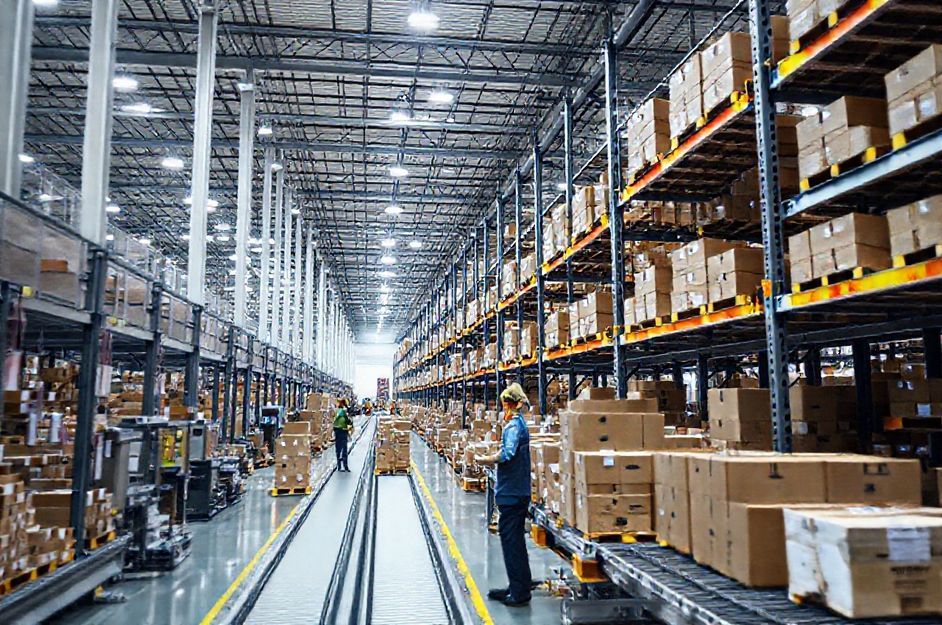
Parcel shippers are tasked with reconciling these heightened consumer demands with cost-effectiveness. Fortunately, advancements in distribution technology are available to support these goals. Designing a distribution center capable of meeting these demands requires a careful evaluation of new processes and technologies with the goal of maximizing speed, accuracy, and cost efficiency.
Traditional methods often struggle to manage the diversity of products and order sizes efficiently. The new generation of distribution centers leverages technology to process more volume faster, cheaper, and with greater accountability and order visibility. However, a wholesale replacement of existing systems with an ‘all-in-one’ solution isn’t always the answer. A phased implementation of modern technologies and optimized practices can yield similar results.
Current software systems rely on advanced material handling equipment and sophisticated hardware to achieve optimal performance. Upgrading software without addressing underlying infrastructure limitations can be ineffective. A successful transition from a manual to a highly automated operation may require simultaneous system-wide upgrades.
Modern Warehouse Management Systems (WMS) offer comprehensive functionality, supporting automated processes and incorporating industry ‘best practices.’ Cost-effective ‘second tier’ WMS providers offer technologically advanced solutions with modular implementation options tailored to specific client needs and complex distribution scenarios. Selecting the right software is paramount for optimizing distribution processes.
Within the distribution center, technology streamlines material flow. Voice recognition software, initially experimental, now manages receiving, putaway, and picking with improved accuracy and efficiency. Radio Frequency Identification (RFID) surpasses barcode scanning for receiving, inventory management, and shipping carton identification. Unit sortation systems, including ‘pick to light’ and ‘put to light’ systems, are now available for diverse demand levels, making unit sortation cost-justifiable even with stringent ROI requirements.
The rise in customer service expectations has led to smaller, more frequent orders, resulting in an increase in lightweight cartons. Conveyor systems have adapted to handle these smaller packages. Electronically controlled accumulation conveyors eliminate minimum weight requirements, offering ease of maintenance and low-cost operation.
Increased facility throughput necessitates advancements in outbound carton sortation. High-speed carton sortation systems, integrated with efficient merge technology, enable rapid product handling. This results in ‘plug and play’ back-end distribution systems capable of delivering high rates with exceptional accuracy.
Opportunities exist for acquiring pre-owned equipment from defunct e-commerce ventures. These systems, often representing significant capital investments, can be acquired at discounted prices. Partnering with the right vendor in the secondary market can yield substantial savings.
In conclusion, adapting to the shortened supply chain requires a comprehensive and cost-effective distribution strategy that incorporates moderately complex information systems and sophisticated material handling technologies. This is now a fundamental requirement for remaining competitive. While it requires investment, it involves proven technology with compelling and guaranteed returns.