
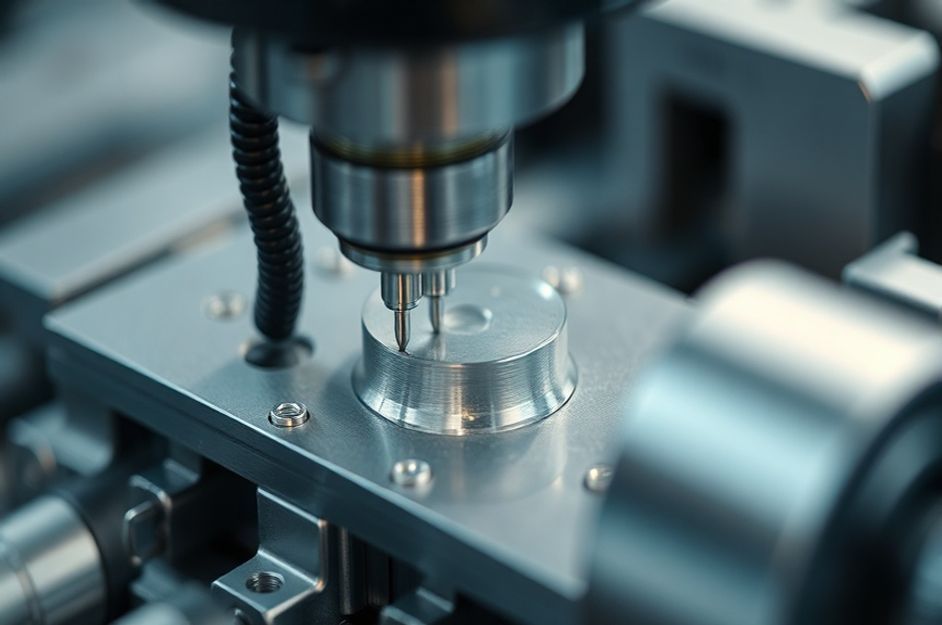
The rising demand for micron and sub-micron manufacturing presents significant opportunities and challenges for tool shops and production parts manufacturers in the United States. Micromachining, which involves creating part details and holes smaller than a human hair (measured in microns, or thousandths of a millimeter), has captured the attention of various industrial sectors.
Market studies indicated that micromanufacturing was a $3.9 billion industry in 2001 and projected to reach $9.6 billion by 2006. Industries such as biomedical, medical appliances, personal electronics, fluid transfer, optics, fiber optics, RF electronics, communications, military, aerospace, and automotive are increasingly focused on micromanufacturing. These sectors recognize the potential for innovative consumer and industrial products.
The demand for smaller, lighter parts with increased functionality is pushing original equipment manufacturers to reconsider the design and concepts of machining systems and technologies. Micromachined parts are already prevalent in computers, heart monitors, pacemakers, automobiles, cell phones, and numerous other applications.
The ability to produce parts with high accuracy and surface quality from materials like metal alloys and ceramics is highly valued. Advanced machines can now create holes as small as 0.00078 inches in diameter, which is significantly smaller than previous machining capabilities.
Micromanufacturing represents a viable business opportunity for machine manufacturers and suppliers. By mastering these advanced designs, concepts, and machine tools, U.S. manufacturers can broaden their expertise and service offerings, thereby enhancing their competitiveness against foreign manufacturers.