
In lean manufacturing, surplus inventory represents a significant form of waste, one of the seven “muda” that hinder efficiency and profitability. Eliminating this waste stream is crucial for any manufacturing operation striving for peak performance.
Excessive raw materials, work-in-progress items, and finished goods unnecessarily tie up valuable capital within the production process. This capital could be better utilized for strategic business investments. Furthermore, the handling and storage of surplus inventory consume valuable space, demand time and resources, and ultimately inflate operational costs. By streamlining production lead times and minimizing handling and storage requirements, businesses can unlock substantial capital and improve cash flow.
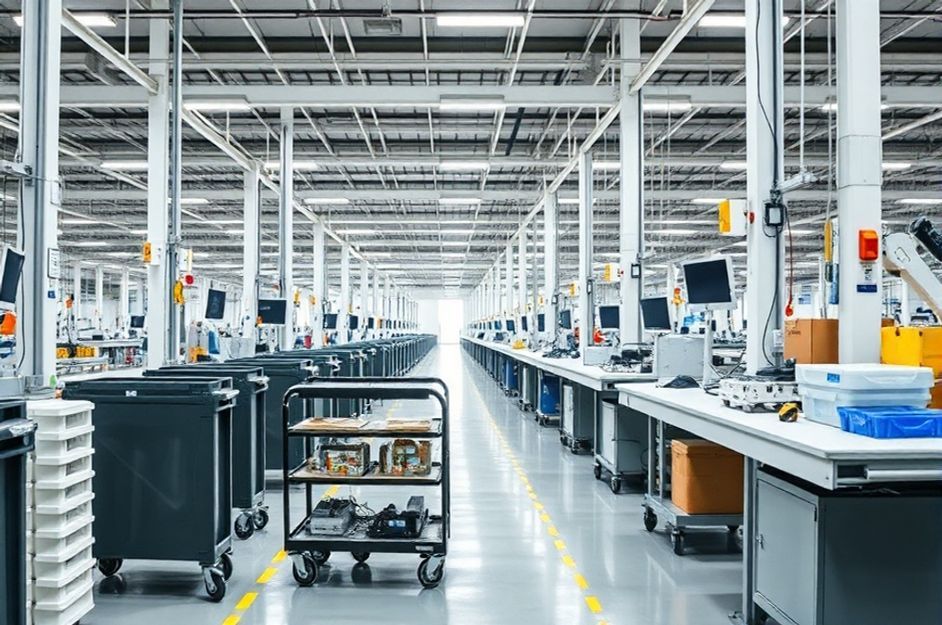
Leading manufacturers are increasingly leveraging modular and adaptable carts, trolleys, and lineside storage solutions to foster flexible processes. These systems enable the just-in-time delivery of materials and components directly to the production line, aligning production output with real-time demand.
Modular systems facilitate rapid deployment and easy reconfiguration. New or temporary applications can be swiftly implemented and readily adapted to accommodate evolving process demands. This adaptability minimizes the overall cost of implementation and ownership, as components can be repurposed for new applications.
Strategically designed carts and trolleys can deliver precise quantities of specific items to the production line, minimizing excess. Establishing parts supermarkets at the lineside and replenishing them frequently based on predetermined stock levels further optimizes inventory control. The overall effect is a significant reduction in the amount of inventory circulating within the supply chain. Manufacturers can also enhance the agility of their processes, enabling them to respond more rapidly and effectively to shifting customer preferences.
Another key aspect of lean manufacturing focuses on minimizing unnecessary handling and storage movements, another of the seven “muda.” Extraneous movement within the workspace increases task completion times, diminishes productivity, and escalates costs. This often occurs when tools, equipment, or components are positioned inconveniently, forcing staff to walk, reach, or stretch excessively to retrieve or manipulate them.
To mitigate these wasteful movements, modular workstations and storage areas should be configured ergonomically. Items should be positioned optimally, within easy reach, and readily accessible whenever needed. By reducing unnecessary movements, staff can complete tasks or processes more efficiently, resulting in improved productivity and overall performance.
Ergonomic production and storage areas also minimize distractions for staff, reducing the likelihood of errors and contributing to enhanced quality control.
Adaptable workstations and parts supermarkets can be tailored to occupy precisely the required space – no more, no less – to accommodate specific manufacturing processes. In addition to improving ergonomics, this approach maximizes production density, allowing more workstations or manufacturing cells to be integrated into the same physical area, thereby reducing the cost per unit produced.