
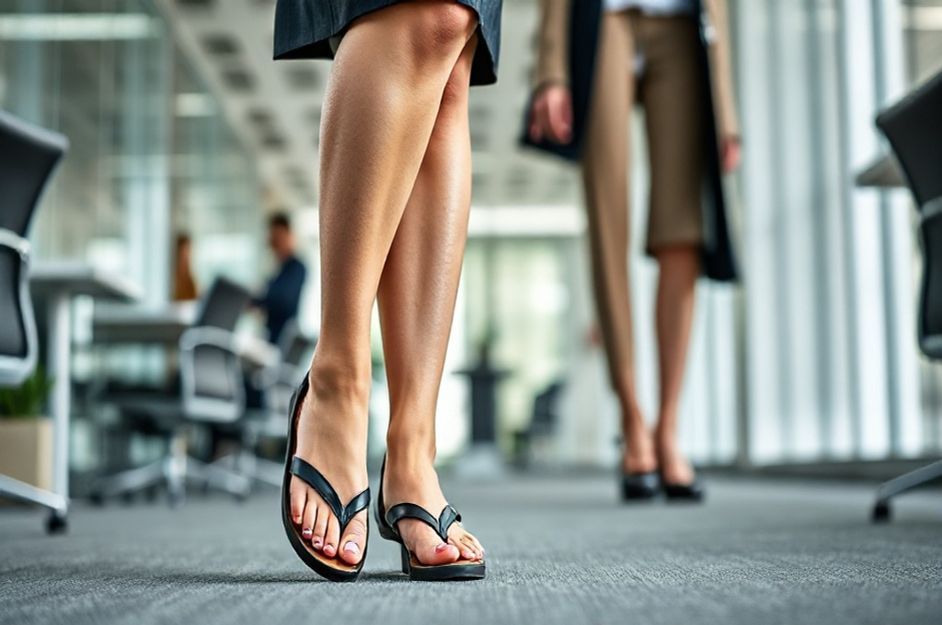
The rising trend of women wearing flip-flops in the workplace, particularly during warmer months, has sparked debate among U.S. style experts. Concerns are growing that this seemingly harmless footwear choice could potentially damage not only foot health but also career prospects.
The availability of diverse flip-flop styles, including beaded, leather, and sequined designs, makes it easier for women to consider them workplace-appropriate. However, many companies maintain a stricter stance.
One employee at West Glenn Communications admits to wearing flip-flops only on days without important client meetings, avoiding them when disapproving colleagues are present. This reflects a wider awareness of potential judgment.
Despite the concerns, flip-flops remain a summer wardrobe staple for many. An Old Navy and Gap online survey revealed that flip-flops topped the list of summer work attire for high school and college students, with over 31% of women surveyed considering them essential.
However, corporations such as BNP Paribas explicitly prohibit beachwear, including flip-flops, in their dress code.
Style experts caution that flip-flops can negatively impact one’s career. Meghan Cleary, a style commentator, emphasizes that “shoes convey the mood of a woman. Wearing flip-flops conveys the mood that you are relaxed and on vacation. That’s not a good message in the office.”
Beyond career implications, doctors are increasingly worried about the detrimental effects of flip-flops on foot health. The American College of Foot and Ankle Surgeons has linked flip-flops to a surge in heel problems among teenagers and young adults.
A representative noted the rise in heel pain among patients aged 15 to 25, a demographic not typically prone to such issues. Thin-soled flip-flops offer minimal arch support, exacerbating abnormal biomechanics in foot motion, ultimately leading to pain and inflammation.
Originating from traditional Japanese woven and possibly wooden-soled sandals in New Zealand, flip-flops have existed for at least 70 years. The Y-shaped, flat-soled sandal is globally recognized and worn across all social classes, particularly in developing countries due to their affordability and ease of production.
The term “flip-flop” derives from the characteristic slapping sound produced when the sandal strikes the ground.
In recent years, flip-flops have transformed into a trendy fashion item, available in countless colors and embellishments. Even bridal flip-flops adorned with Swarovski crystals can be found, retailing for around $140.
In June 2005, the Northwestern University’s champion women’s lacrosse team faced criticism for wearing flip-flops to a White House meeting with the President, deemed inappropriate attire.
Ellen Campuzano, president of the Committee of Color and Trends, believes that the flip-flop craze is nearing its end. “Usually these trends come and go in about five years,” she stated. “I think we’ve reached the peak. They can’t be any more widespread, so maybe next summer something will replace them.”